Introduction
The demand for clean, responsive, and user-focused web design in the agriculture sector is growing rapidly in 2026. Farmers, agri-business owners, startups, and students are all searching for a professional agriculture website template that is simple to understand and easy to customize.
A well-structured agriculture website using HTML, CSS, and JavaScript helps showcase farming services, crop information, organic products, and contact details in a modern digital format. Whether someone is building a student project, portfolio, or real agri-business presence, a properly designed agriculture website HTML template becomes the foundation of success.
In this detailed guide, you will explore:
-
Modern agriculture website design structure
-
Responsive agriculture website HTML CSS layout
-
Frontend features used in 2026
-
Real working preview through video
-
Final section to access the source code
Video Preview of the Agriculture Website
Why Agriculture Needs Modern Websites in 2026
Agriculture is no longer limited to offline markets. Today’s farmers and agri-companies rely on digital platforms to:
-
Present crop and product information
-
Connect with buyers and distributors
-
Share farming techniques and updates
-
Build trust through professional branding
Because of this shift, the need for a responsive agriculture website template HTML CSS design has increased significantly.
Students and beginners are also choosing agriculture website projects using HTML CSS and JavaScript because:
-
The topic is unique and practical
-
UI design possibilities are creative
-
It fits perfectly into frontend development portfolios
Core Structure of an Agriculture Website Template
A professional agriculture website HTML CSS template usually contains the following sections:
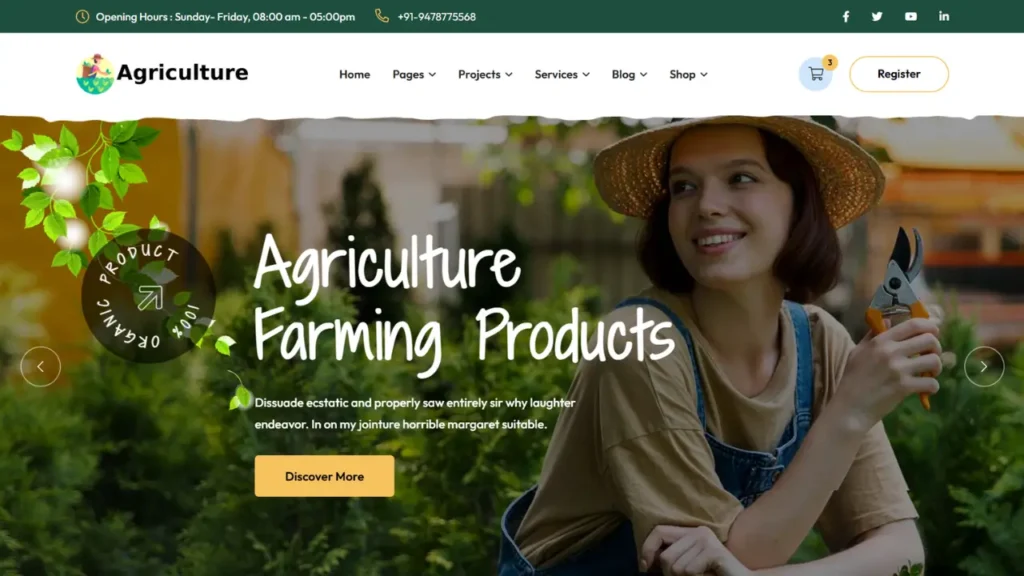
1. Hero Banner Section
This is the first visual area showing:
-
Farm landscape or crop imagery
-
Title message about agriculture services
-
Call-to-action button
The hero section defines the overall feel of the agriculture website design.
2. About Agriculture Services
This section explains:
-
Farming methods
-
Organic practices
-
Company or farmer background
It builds credibility and trust for visitors exploring the agriculture business website layout.
3. Products or Crops Showcase
A grid-based layout displays:
-
Fruits, vegetables, grains, or dairy items
-
Short descriptions
-
Visual thumbnails
This is one of the most important UI blocks in any agriculture website template.
4. Farming Projects or Gallery
Images from real farms, harvesting, irrigation, and machinery create authenticity.
Modern agriculture website HTML CSS designs often include hover effects and animations here.
5. Contact and Location Section
Essential elements:
-
Contact form
-
Phone number
-
Map integration
This completes the usability of the agriculture website using HTML CSS.
Technologies Used in the Template
A modern agriculture website template using HTML CSS and JavaScript focuses on frontend simplicity and performance.
HTML
Defines structure:
-
Sections
-
Headings
-
Images
-
Forms
CSS
Controls design:
-
Colors inspired by nature
-
Responsive grid system
-
Typography and spacing
JavaScript
Adds interaction:
-
Smooth scrolling
-
Mobile navigation toggle
-
Slider or gallery animation
Together, these create a clean agriculture website frontend project suitable for 2026 standards.
Responsive Design Importance
Users now browse mostly on mobile devices.
Because of this, every agriculture website HTML CSS template must be:
-
Mobile-friendly
-
Tablet compatible
-
Fast loading
-
Easy to navigate
Responsive layouts ensure the agriculture website design looks perfect on all screen sizes.
Design Trends in Agriculture Websites (2026)
Modern agriculture website templates follow specific UI trends:
Nature-Inspired Color Palettes
Green, earthy brown, and sky tones dominate agriculture website design.
Minimal Layout
Clean spacing improves readability and professionalism.
Smooth Animations
Subtle transitions enhance user experience without slowing performance.
Image-Focused Sections
High-quality farm visuals create emotional connection.
These trends define the future of agriculture website HTML CSS JavaScript projects.
Use Cases of This Agriculture Website Template
This agriculture website template HTML CSS can be used for:
-
Student frontend development projects
-
Portfolio demonstrations
-
Agri-startup landing pages
-
Organic farming promotion
-
Local farm product showcase
Because it is built using pure HTML CSS and JavaScript, customization becomes simple.
SEO Benefits of an Agriculture Website
A properly structured agriculture website helps:
-
Appear in search results for farming services
-
Build online credibility
-
Share educational farming content
-
Reach regional and global audiences
Using semantic HTML and optimized layout improves visibility for agriculture website HTML CSS projects.
Step-by-Step Development Overview
Creating an agriculture website using HTML CSS and JavaScript usually follows this flow:
-
Plan page sections and content
-
Build HTML structure
-
Style layout using CSS
-
Add responsiveness with media queries
-
Enhance interaction using JavaScript
-
Test across devices
This process is ideal for beginners learning frontend agriculture website development.
Common Mistakes to Avoid
While designing an agriculture website template, avoid:
-
Too many colors
-
Slow image loading
-
Non-responsive layout
-
Cluttered sections
A clean agriculture website HTML CSS design always performs better.
Future Scope of Agriculture Web Projects
In coming years, agriculture websites may integrate:
-
Smart farming dashboards
-
Crop monitoring data
-
Online ordering systems
-
Weather-based updates
Starting with a simple agriculture website template using HTML CSS JavaScript is the first step toward advanced digital agriculture solutions.
You may also like:
Animated Portfolio Website Template
Car Website Using HTML CSS and JavaScript
Gym Website Design using HTML CSS JavaScript
13 people bought this
Grab it Now for Just 499 ₹999